


Toughened Glass vs Laminated Safety Glass: Which Is Best for Your Shower?

When installing a new shower, the type of glass you choose is about more than appearance. It affects safety, durability, maintenance and how well your shower performs over time. At Inkosi Aluminium & Glass, we believe that choosing the correct glass specification is an important part of creating a shower that looks good and performs as it should.

For most standard framed and frameless shower doors and panels, toughened safety glass is the preferred choice because of its strength, thermal resistance and breakage characteristics.
But what is the difference between toughened glass and laminated safety glass? Why does it matter in a bathroom environment? And what should homeowners, builders and renovators consider before installing a new shower?
Let's take a closer look.
What Is Toughened Safety Glass?
Toughened safety glass, also known as tempered glass, is ordinary glass that has undergone a specialised heat-treatment process to increase its strength.
The glass is cut to the required dimensions, drilled where necessary, and its edges are finished before it is heated and rapidly cooled under controlled manufacturing conditions. This process creates internal stresses that make the finished glass significantly stronger than ordinary annealed glass.
Toughened glass is commonly used in shower doors, frameless shower panels, bath screens and other applications where glass needs to withstand everyday use and temperature changes.
Why is toughened glass suitable for showers?
There are several important advantages:
Increased strength: Toughened glass is generally around four to five times stronger than comparable ordinary annealed glass, depending on the product and conditions.
Improved thermal resistance: It can withstand greater temperature differences across the glass than ordinary annealed glass, making it well suited to typical shower environments.
Safer breakage characteristics: If it breaks, toughened glass typically fragments into many small pieces rather than large, sharp shards.
A clean, modern appearance: It is ideal for frameless showers, where the glass creates an open, uncluttered look.
Low-maintenance performance: The glass itself is easy to clean with suitable bathroom glass cleaners, although the hinges, seals and fittings also need regular care.
It is important to understand that toughened glass is not unbreakable. Damage to an edge, an unsuitable fitting, excessive pressure or incorrect installation can cause it to fail. Correct glass thickness, finished edges and properly installed hardware are essential.

What Is Laminated Safety Glass?
Laminated safety glass is manufactured by bonding two or more sheets of glass together with a transparent interlayer, commonly made from polyvinyl butyral (PVB).
The interlayer helps hold the broken glass fragments together if the glass breaks. Instead of all the pieces immediately separating, many remain attached to the interlayer.
This characteristic makes laminated glass particularly useful in applications where retaining broken glass in place is important, such as certain windows, overhead glazing, security glazing and other specially specified installations.
However, laminated glass is not automatically the best option for every application.
The key is understanding how it is constructed, where it will be installed and what performance is required.
What Happens to Laminated Glass in a Hot, Humid Bathroom?
Bathrooms are exposed to repeated temperature changes, steam, moisture and cleaning products. These conditions make the quality of the glass, its interlayer and its edge protection particularly important.
Laminated glass consists of separate glass sheets joined by an interlayer. The edges of the finished panel are especially important because they can provide a pathway for moisture to reach the interlayer if the laminate is not adequately protected.
1. Moisture can affect exposed edges
If moisture repeatedly reaches the edge of a laminated glass panel, particularly where the edge is poorly sealed, damaged or unsuitable for the environment, it can contribute to deterioration of the interlayer bond.
Depending on the interlayer material and the conditions, this may result in cloudiness, whitening, bubbles or separation between the glass and the interlayer. This process is known as delamination.
It is important to note that properly manufactured laminated glass with a suitable interlayer and appropriate edge protection can perform well in many environments. Delamination is not inevitable simply because laminated glass is installed in a bathroom.
2. Temperature changes place demands on the glass
During a shower, warm water and steam can heat the glass. When the bathroom cools, the glass temperature changes again.
Glass can also experience uneven temperatures across a single pane. Its edges may behave differently from its central area because of how the glass is supported, exposed to heat and connected to surrounding materials.
These temperature differences can create thermal stresses. Edge damage, existing flaws and unsuitable glazing conditions can increase the likelihood of breakage.
Toughened glass is specifically heat-treated to improve its strength and resistance to thermal stress compared with ordinary annealed glass.
However, no type of glass is immune to every temperature-related failure. The correct specification and installation remain important.
3. The condition of the edges matters
The edges of any shower glass panel deserve attention.
With laminated glass, the edge construction and protection help determine how well the interlayer resists moisture exposure over time. With toughened glass, properly processed edges are equally important because chips, cracks or damage can compromise the panel's integrity.
Toughened glass must be manufactured to its final dimensions before the toughening process. It cannot be cut, drilled or ground afterwards without risking breakage.
For this reason, accurate measurements, appropriate edge finishing and careful handling during installation are essential.
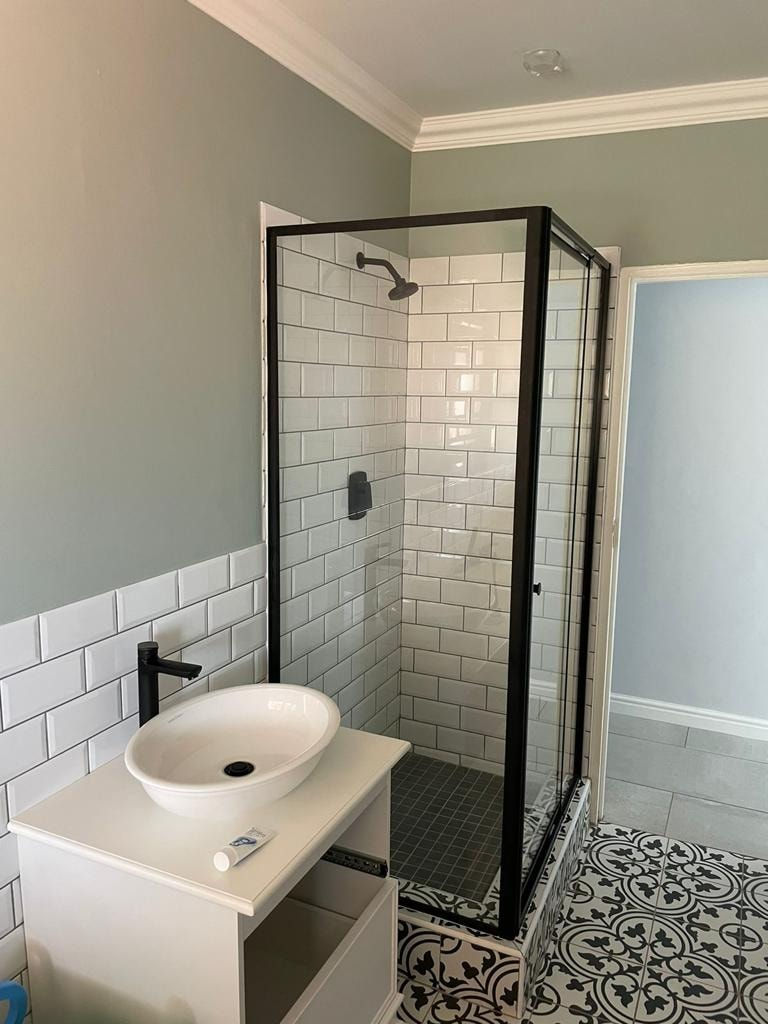
Why Toughened Safety Glass Is the Preferred Choice for Most Showers
For conventional framed and frameless showers, toughened safety glass offers a combination of strength, thermal performance and breakage behaviour that makes it particularly suitable for the application.
Here is how the two types compare.
Feature | Toughened safety glass | Laminated safety glass |
Manufacturing | Glass is heat-treated to increase strength | Two or more glass sheets are bonded with an interlayer |
Breakage behaviour | Typically breaks into many small fragments | Interlayer helps retain broken fragments |
Temperature resistance | Generally better thermal resistance than ordinary annealed glass | Depends on the glass construction, interlayer and conditions |
Edge considerations | Edges must be correctly finished and protected from damage | Edge protection is important to help prevent moisture-related interlayer deterioration |
Typical applications | Shower doors, frameless shower panels and bath screens | Windows, security glazing and applications requiring fragment retention |
Main consideration | Correct thickness, edge quality, fittings and installation | Correct laminate construction, edge protection, support and suitability for the environment |
Both products can qualify as safety glazing when they meet the applicable requirements. They simply provide different performance characteristics.
Laminated glass can be appropriate for specially designed applications, but for a typical shower door or panel, correctly specified toughened safety glass is generally the practical choice.

Is Toughened Glass Safer When It Breaks?
One of the main safety advantages of toughened glass is the way it typically breaks.
Ordinary annealed glass can break into large, sharp shards that create a significant risk of cuts and serious injury.
Toughened safety glass is designed to fragment into numerous smaller pieces when it fails. This generally reduces the risk of severe cutting injuries compared with ordinary glass.
Laminated safety glass offers a different safety benefit: its interlayer can help keep broken fragments attached to the remaining sheet.
Neither type makes glass completely harmless when broken. Toughened fragments can still cause injury, and laminated glass can also create hazards if its glass layers crack or its supporting structure fails.
For showers, the aim is to use suitable, compliant safety glazing that reduces the risk of injury, together with fittings and installation methods designed for the particular glass panel.
What Does South African Building Practice Require for Shower Glass?
Safety glazing is particularly important in bathrooms because shower doors and panels are positioned where people may come into direct contact with the glass.
South Africa's National Building Regulations address the selection and installation of glazing, with the relevant provisions and standards helping determine the appropriate safety requirements.
The South African building guidance for frameless shower panels specifies toughened safety glass thicknesses and maximum panel sizes according to the application. The appropriate specification depends on factors such as panel dimensions, door configuration and support conditions.
Glass thickness should therefore never be selected on appearance or price alone.
The glass must be suitable for its intended application and comply with the applicable requirements, including relevant safety-glazing standards such as SANS 1263-1 where applicable.
For further information, consult the South African glazing requirements and the relevant provisions of SANS 10400-N.
What Should You Consider When Installing a New Shower?
Whether you are renovating a family bathroom, building a new home or upgrading a rental property, consider these factors before choosing your shower glass.
1. The type of shower
A framed shower, frameless shower, pivot-and-panel shower, three-door shower or walk-in shower may require a different glass specification and support arrangement.
2. Glass thickness and panel dimensions
The correct thickness depends on the panel size, how it is supported, the door configuration and the applicable technical requirements.
3. Quality of the fittings
Hinges, brackets, channels and handles must be suitable for the glass and designed to support the intended loads. Poorly aligned or incorrectly installed fittings can place unnecessary stress on the glass.
4. Edge finishing and handling
Glass edges must be properly processed and protected during transport and installation. Even toughened glass can fail if its edges are damaged.
5. Professional measurements and installation
A shower needs more than a piece of glass that fits the opening. The panel layout, door movement, clearances, seals, supports and fixing points must all work together.
6. Everyday care
Use suitable glass cleaners, avoid abrasive products and inspect the fittings and seals periodically. Do not continue using a shower panel with visible chips, cracks or damaged edges; arrange a professional assessment.
Looking for Shower Glass in KuGompo (Formerly East London)?

At Inkosi Aluminium & Glass, we supply and install custom shower solutions for homeowners, builders, renovators and property professionals in KuGompo (formerly known as East London), Buffalo City and surrounding areas.
Our shower services include:
Custom-made framed and frameless showers
Pivot-and-panel shower doors
Three-door shower configurations
Walk-in shower screens
Bath screens
Replacement shower glass and related repairs
Installation of customer-supplied shower units, subject to suitability
Every bathroom has different dimensions and requirements. We can help you consider the appropriate glass, configuration and fittings for your project.
Our approach is to focus on practical solutions, careful measurements and workmanship suited to the finished space.
Frequently Asked Questions About Shower Glass
Is toughened glass better than laminated glass for showers?
For most standard framed and frameless shower doors and panels, toughened safety glass is generally the preferred option because of its strength, thermal resistance and breakage characteristics. Laminated glass may be appropriate for specially designed applications where retaining fragments is a priority, provided the complete glazing system is suitable.
Can laminated glass crack or delaminate in a shower?
Laminated glass can crack, and its interlayer can deteriorate under certain conditions. Repeated moisture exposure at inadequately protected edges may contribute to delamination. However, this does not happen to every laminated glass panel, and heat alone does not automatically cause failure.
Does toughened glass break easily?
No. Properly manufactured toughened glass is significantly stronger than comparable ordinary annealed glass. Nevertheless, edge damage, impact, incorrect installation or excessive stress can cause it to break.
Does toughened shower glass break into sharp pieces?
Toughened glass typically breaks into many small fragments rather than the large, sharp shards associated with ordinary annealed glass. Injury is still possible, so correct installation and safe handling remain essential.
What thickness should shower glass be?
The correct thickness depends on the panel dimensions, support arrangement, door type and applicable standards. Frameless shower doors and fixed panels may have different requirements. A professional should confirm the specification before manufacture.
Can ordinary glass be used for a shower?
Ordinary annealed glass should not be substituted for the required safety glazing in a shower. The glazing must be appropriate for the application and comply with the applicable South African safety requirements.
Does Inkosi Aluminium & Glass supply and install showers?
Yes. Inkosi Aluminium & Glass supplies and installs custom framed and frameless showers, walk-in shower screens, pivot-and-panel showers, three-door showers and bath screens in KuGompo (formerly East London), Buffalo City and surrounding areas. Installation of customer-supplied shower units can also be discussed.
Choose the Right Glass for Your Bathroom
A shower should look good, function properly and be designed with safety in mind.
Toughened safety glass is an excellent choice for most conventional shower installations because it offers increased strength, improved thermal resistance and safer breakage characteristics than ordinary annealed glass. Laminated safety glass has its own valuable applications, but the correct choice depends on the requirements of the installation.
If you are planning a new shower or replacing an existing unit, speak to Inkosi Aluminium & Glass about a solution suited to your bathroom.
Inkosi Aluminium & Glass — Adding The EXTRA to ORDINARY Properties.
Serving KuGompo (formerly East London), Buffalo City and surrounding areas.


Comments